


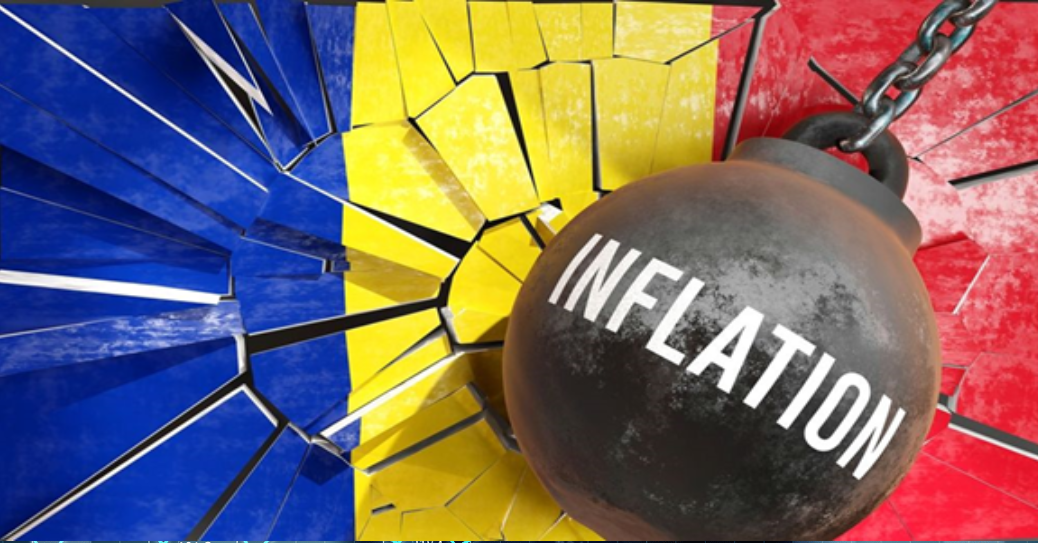
At the end of 2025, Romania faced one of the highest inflation rates in recent years: approximately 9.8%, according to official data on consumer price developments. This level is significantly above the inflation target set by the National Bank of Romania (NBR) at 2.5% ± 1 percentage point and reflects substantial price increases in essential goods and services such as electricity, food, and consumer services.
The high inflation observed in 2025 has several causes, the most important of which are:
- the removal of electricity price caps, which led to significant increases in utility bills for consumers and companies;
- rising production costs and supply-side adjustments along the economic value chain.
These effects overlapped with traditional price pressures, generating an inflation surge well above expectations from the spring of 2025.
What the NBR’s forecast shows for 2026
In its November 2025 Inflation Report, the NBR updated its forecast for price developments in 2026.
For the end of 2026, the NBR anticipates a significant decline in inflation to around 3.7%, provided that exogenous effects and supply shocks gradually subside.
A return of inflation to within the target range is projected to occur only in 2027, according to the central projection scenario.
This trajectory is conditional on a reduction in pressure factors—such as the fading impact of energy price increases and fiscal adjustments—as well as a cooling of aggregate demand in the economy, amid more prudent fiscal and monetary policies.
What these developments mean for investors
For anyone investing or planning to invest in capital markets or other financial assets, inflation and its outlook are essential for at least three practical reasons:
- Real returns can decline dramatically
If a financial instrument offers a nominal return of, say, 8% per year, but inflation is 9.8%, then the real (inflation-adjusted) return is negative. In practice, your purchasing power declines even if you record a nominal gain. This affects how you assess asset profitability over both the short and long term.
- NBR decisions and interest rates will influence the cost of capital
In a high-inflation environment, the NBR is likely to keep interest rates at relatively elevated levels to curb price pressures. Higher interest rates mean higher borrowing costs and can make financing investments more difficult for both companies and households.
- Volatility and asset valuations
Financial markets tend to be more volatile when inflation exceeds expectations. Investors become more cautious, which can lead to greater swings in equity prices or adjustments in bond valuations.
Practical strategies for investors during periods of high inflation
In the face of persistent inflation, investment strategies can be adjusted to offer protection and preserve the real value of capital.
An investor should diversify their portfolio with instruments that have the potential to preserve or grow in real terms (for example, shares of solid companies with profit growth capable of absorbing inflation). In addition, inflation-linked bonds or floating-rate instruments can provide protection during an inflationary cycle.
Monitoring developments in monetary and fiscal policies is essential, as they provide clues about the overall direction of the economy and the risks associated with an investment portfolio.
